|
Dear
friends
"I
wish you all a Merry Christmas and a more promising New Year in which, through
continued loving dialog with each other, we can become better inoculated against
the destructive influence of Putin, Trump and Hamas on our lives."
Strangely enough, that's how I started the last two years, and since we're
obviously going to have to spend a lot of time this year integrating with those
we don't feel we can accommodate, I'll try to make my annual navel-gazing
retrospective even more concise....
I write these yearbooks mainly to remember what happened each year.
So, the rest of you should just go straight to the sections in the chapter
overview that most relate to your relationship with me and mine – or skip it all
with a quick “Ctrl F” search for your own name to make sure you haven't been
mentioned in a bad light this year :-)
1. the family
Only of interest to those who know us
2. My
"work" as an involuntary retiree
...but you've all seen my lectures, so skip to the next chapter
3. My new book
"The Ghetto in Our Hearts"
about the echo chambers and filter bubbles we use to exclude others
4. My exhibitions
...not much this year, so go on...
5. Our vacations
only of interest to those of you looking for less climate-impacting vacations
6. My work in the Ubuntu House
with our dialogues between Jews
and Muslims
7. Deaths and other events of the year
.... Well, I'll remember
to mention you too when the time comes...
8. Revisiting the past
FAMILIEN
Most of your Christmas letters are mainly about family –
and as you know, I have ALWAYS put family first – so naturally, that's
where I'll start...
... our son Daniel
... still loves his job as a social and health care
assistant in a nursing home and among people with disabilities. He comes home
with a sparkle in his eyes and tells us what he has just learned from the
residents' stories about their past lives. He rushes around on his electric bike
to spend more time with them than you see in this year's best film,
“Home dear home” (see
it – before many of us soon become statistics in the municipality's Excel
spreadsheets).
But he becomes saddened to see how his colleagues are
being pressured – especially the many foreigners whom the welfare state simply
cannot do without.
When Daniel needs to de-stress, he takes a quiet little
trip around the world, like a modern person.
|
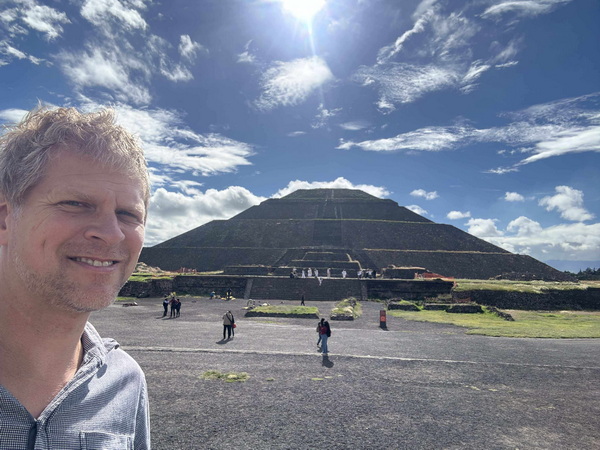
Daniel in Mexico with his girlfriend Yuxi
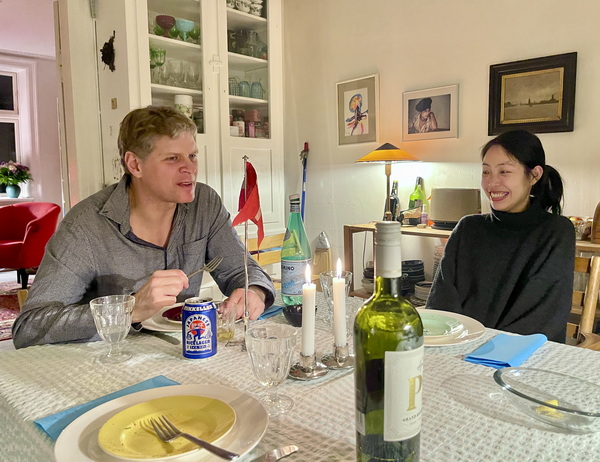
Yuxi when she flew in from China to celebrate Daniel's 45th birthday
|
In last year's Christmas letter, I mentioned the Chinese woman Yuxi,
with whom he ended up staying as a couch surfer. It turned out that she is a
successful businesswoman. First, she flew him around to the finest Chinese
hotels in 2024. And when she thought they had become lovers, she flew in for his
birthday in February and gave him a trip to Lofoten to see the northern lights.
Romance still exists – it just travels business class.
As she has a global company, she then took him on a
business trip: Turkey, Slovenia, Italy. And then she moved in with him on
Kapelvej – but quickly realized that the apartment was too small and started
looking to buy a house. Preferably with a garden in Frederiksberg. Here they had
to face Denmark as it is: Chinese people are not allowed to buy houses here, and
they are only allowed to stay here for limited periods of time.
So instead, the summer became an elegant trip around the
world in the service of work: Scotland, Ireland, Mexico, Canada (a conference in
Las Vegas – fortunately, she has no other business dealings with Trump's USA),
Panama – and directly from there to Poland and the Czech Republic.
|
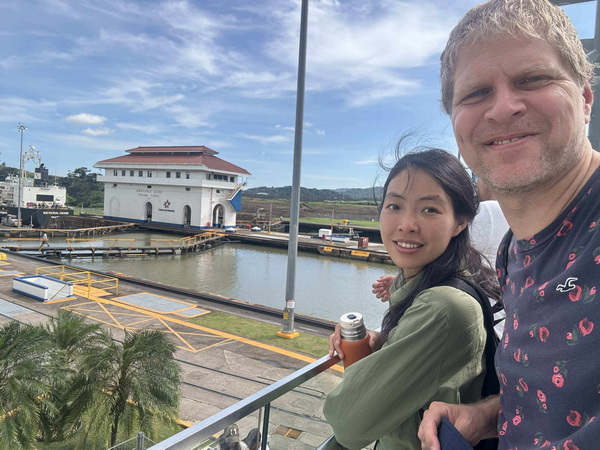
Yuxi and Daniel at the Panama Canal |
|

Daniel and Yuxi relax at the summer house |
But Daniel hasn't completely sold his soul to Mephisto. He gets bored staying in
luxury hotels outside the city center, where you don't just strike up
conversations with “ordinary” people while she's working. So they made a
compromise: half the time they travel on his terms – hitchhiking and living
poorly as couch surfers. And she actually finds this a whole new, exciting and
almost exotic way of life.
They told me about a hair-raising hitchhiking trip up
through British Columbia to Kamloops, and I was shocked by the recognition: It
was exactly the trip I hitchhiked myself in 1971, where I ended up with a
Chinese girl in Vancouver just before my actual trip to the US (page
299 in On saying yes). History repeats itself – it just changes hotel
category.
|
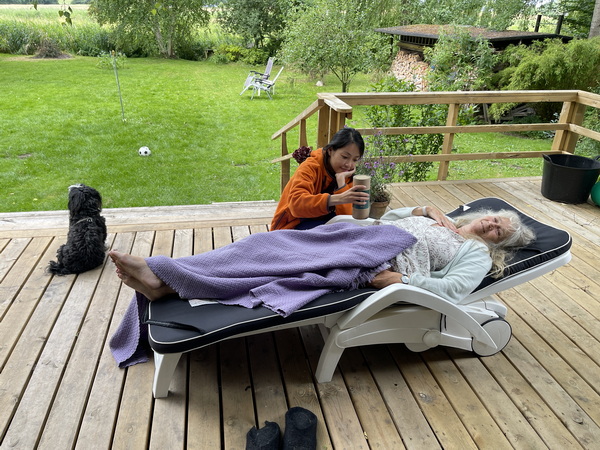
Yuxi i gang med at helbrede Vibeke |
Yuxi is also incredibly sweet and always brings
gifts: a special Chinese foot bath for my nerve-inflamed feet, and at the summer
house she gave us massages with a burning Chinese witch powder that either cures
everything... or makes you believe it does.
|

Yuxi isn't the only one who thinks something is wrong with my head
|
Unfortunately, due to Danish visa regulations, she had to return home to
China in the fall, where her two white ducks missed her. Wherever she goes in
her hometown, they follow her in single file.
She came back here for Christmas for the five days she was allowed to
stay—after which Daniel will now go home to her parents to celebrate their big
holiday: Chinese New Year.
.....our daughter Lalou
.... has traveled extensively in Europe with Interrail, but this year reached
the point in her PhD where she had to continue overseas. She was actually
accepted at the Ivy League university Rutgers in New Jersey, but when Trump was
elected, she simply refused to travel to the US. Instead, she was allowed to
complete her studies with three months at the University of Melbourne and three
in New Zealand.
She is enjoying the warmth and atmosphere in Australia so far, but was
naturally shaken by the terrorist shooting in Sydney, which led to Chanukah
being canceled in Melbourne. Instead, she was to celebrate Christmas at her
“date's” family home – which also solved the problem of her mother wanting to be
there to spend Christmas with her.
|
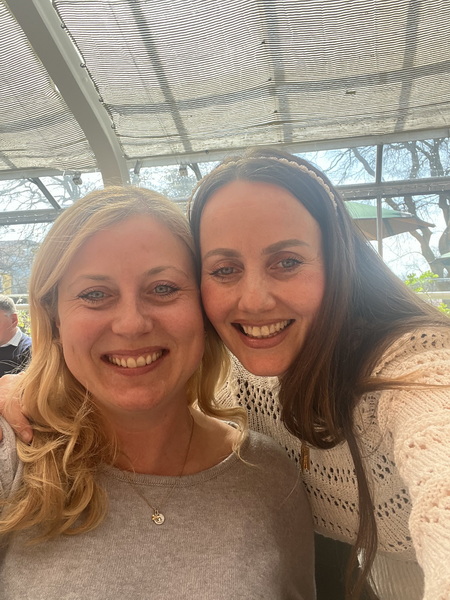
Lalou and Sherin at the Exit Circle conference on psychological
violence,
which is Lalou's specialty as a phychologist.
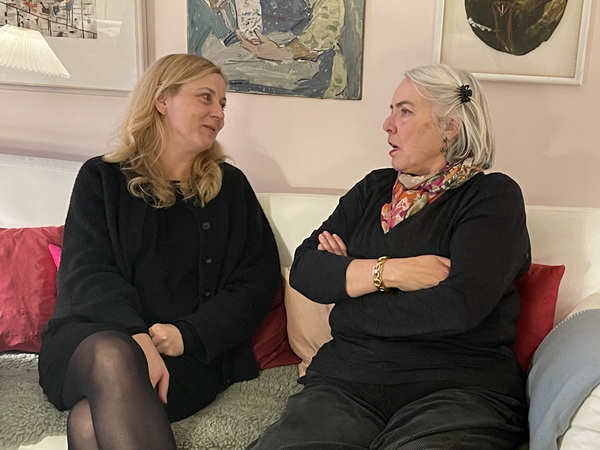
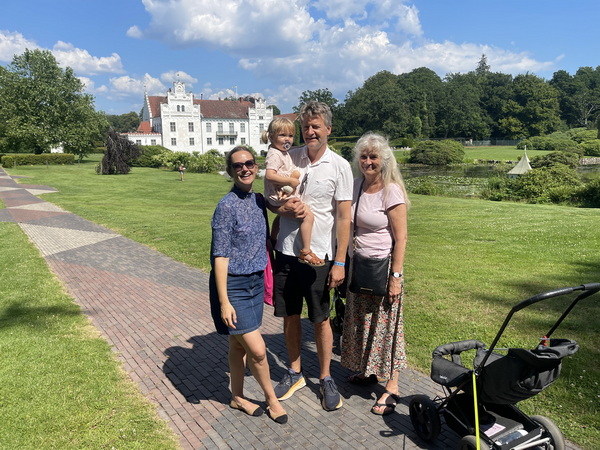
Lalou with Marie Tetzlaff at Vibeke's 70th
birthday party |
...my wife Vibeke...
“continues to make me completely dizzy as a pensioner,” I write every
year—and this year is no exception, with all her completely urgent projects in
both our house and summer cottage.
It was a great joy that both of our traveling children were able to be home
and celebrate Vibeke's 70th birthday on February 21—in all modesty, with only
the closest family invited. “I'm not like you, Jacob, who wants the whole world
at your parties!”
No, no – and that's fine. We still compensate for each other nicely: Vibeke
sacrifices herself completely for our friends, while I typically shut myself
away – only to take my revenge publicly with hour-long monologues in my lectures
on the importance of sacrificing oneself for some theoretical others.
I don't dare write any more about Vibeke. She is very private and has long
since shut herself away in audiobooks and podcasts while working :-)
|
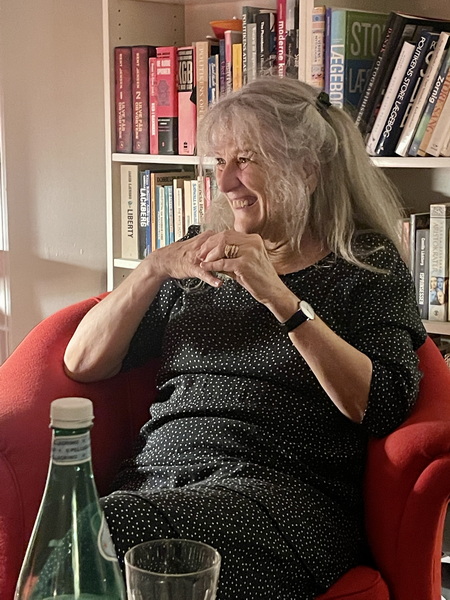
Vibeke on her 70th birthday
|
...our new “granddaughter” Elna
...continues to be a great joy in our lives. Her parents, Christian
Lund and Lærke Rydal, are busy with their work at Louisiana, so we try to help
out when we can. And since I didn't see much of my own daughter while I was
touring the US – “Who's that little girl over there on the living room floor?” I
would come home and ask. “That's your daughter,” Vibeke would reply – it is a
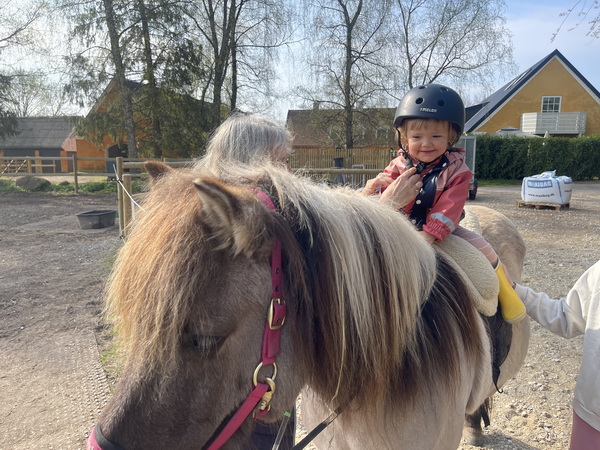
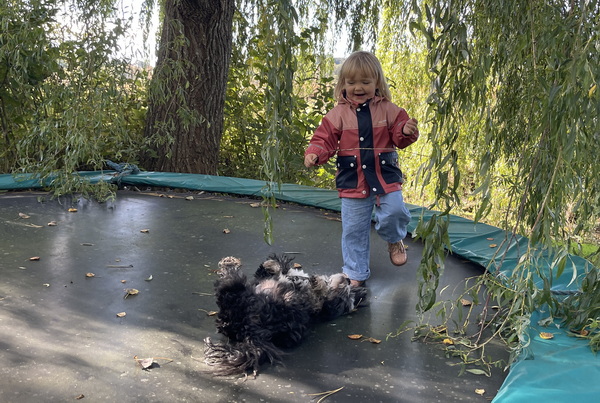
special gift now, week after week, to follow Elna's progress: on horseback, on
the trampoline, and in life in general.
|

Elna by the stream at our summer house
|
Elna is only three years old, and we look after her especially when her
parents travel to distant countries – like when Christian recently spent a week
in Egypt being guided by the
80-year-old Anna Boghiguian on his
Channel Louisiana series featuring the world's most famous writers
and artists.
This means that I miss out on many lectures during his
Louisiana
Literature Festival when I am looking after Elna and Tajo. But I get to
eat with the authors in Bådhuset – including my good friend Laus Strandby
Nielsen when he appeared on the Park stage. It is a pleasure in itself to see
how even the world's greatest authors compete to be allowed to participate in
this particular literature festival, which they consider to be the best and most
enjoyable in the world.
...our faithful and devoted dog Tajo...
– who was actually Vibeke's – has become so attached to me during our 14
years of running 7–8 km together every morning at 7 a.m. (currently with lights
and torches) that (it seems) we have become completely inseparable. Whenever I
go up or down the stairs, he follows me. And if I dare to go to the cinema or
theater without smuggling him in my bag, he lies at home and howls like an
abandoned soul. This has forced Vibeke – also out of consideration for the
neighbors – to purchase an effective anti-bark collar, even though Tajo is
otherwise the epitome of silence.
|

Tajo visits the rebuilt Notre Dame
|
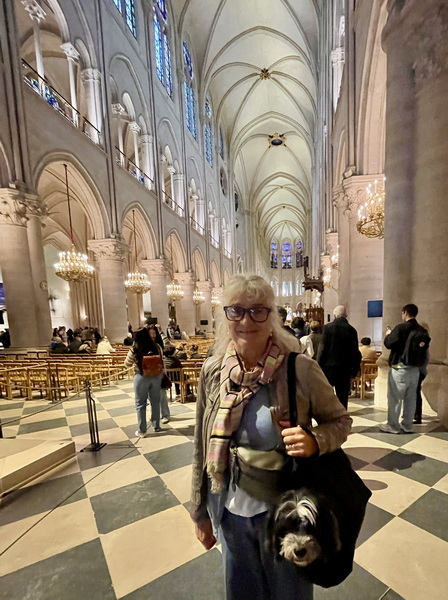
In his dog basket over our shoulder,
Tajo also entered Notre Dame |
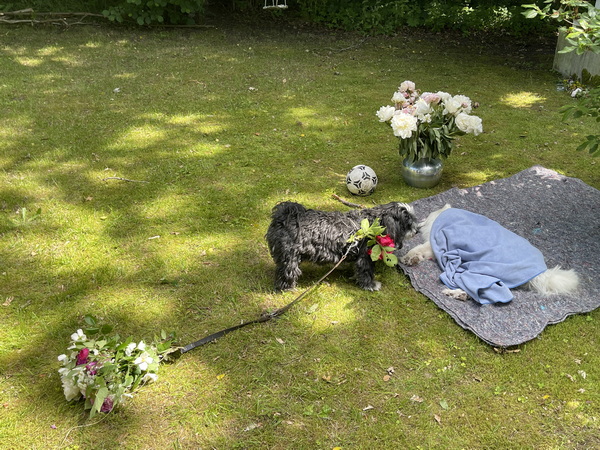
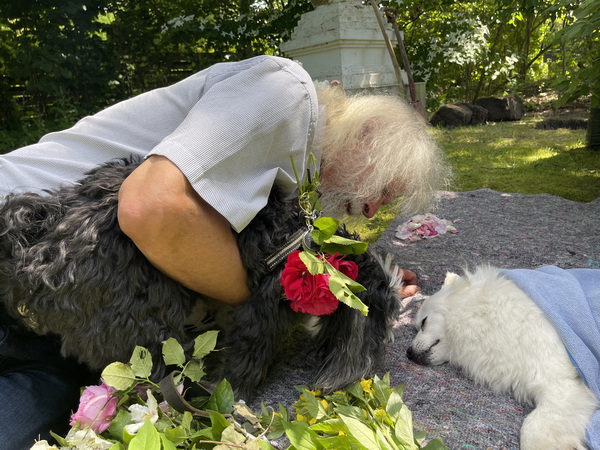
Sadly, Tajo lost his great love and running companion, Coco, who died of
cancer after 13 years together. We arranged a big funeral, attended by almost
half the summer house neighborhood, where Tajo, clearly weighed down, brought
flowers to the grave in the double leash that had so often bound them together.
Before, he always ran up to Coco's yard—even when he knew she wasn't there—but
after the funeral, he now gives it a wide berth. Grief obviously affects dogs
too. (See
their whole life together in pictures, the funeral on page 7.)
I am also convinced that Tajo is deeply religious. Every Sunday, when I'm
lying on the sofa reading the newspaper, he shows up at exactly 10:15 a.m. and
scratches me: Now it's time for us to go to church. We know that animals
can have an internal clock. But the fact that he has also developed a precise
weekly liturgical clock impresses me deeply. That's why he gets very confused
when Kathrine Lilleør only holds online services every fourth Sunday. Tajo
clearly prefers the living word to screen use. Perhaps some of our children
could learn something from that.
Without Tajo's unshakeable faith, I'm sure I would too often forget to go to
church myself.
|

Tajo usually lies quietly in the aisle during communion,
but is easily distracted by other dogs. On the far left is my old friend
from
the theater group Solvognen, film director Jon Bang Carlsen.
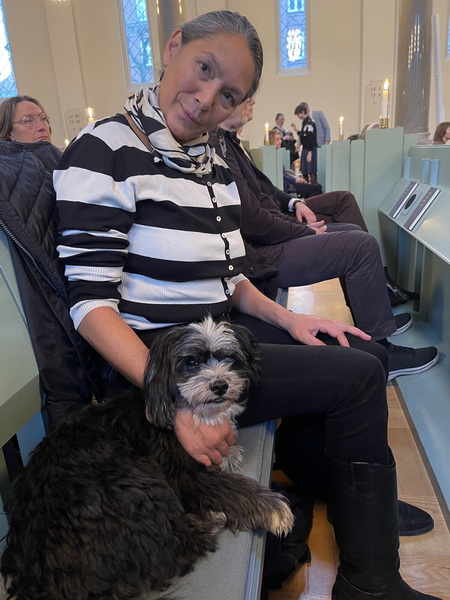
Tajo's faithful church friend, cardiac nurse Annette Winther Petersen
|
...and myself?
|

Someone tried to burn me during the St. Hans bonfire in our
garden
|
..... Well, I felt a little burned out during the year when it
suddenly dawned on me—on Father's Day, no less—that my childhood home was being
torn down.
The large rectory that my father himself designed and furnished after he tore
down the old hundred-year-old rectory in 1950.
The latter caused such grief to the former pastor's two sons that one of them
ended up in the Danish Parliament for the rightwing Danish Folk Party – and sometimes took
party leader Glistrup with him to show him my father's crime.
History seems to repeat itself – just with different actors. I didn't understand
why my father's beautiful parsonage was only allowed to stand for 70 years. He
had thought of everything: the three adjoining garden rooms, extending from the
confirmation room. Here he constantly gathered the large congregation from the
three parishes for communal evenings with readings and wonderful singing, which
rose up to us children in the attic rooms, a little like Bertel Haarder
experienced it through the floorboards in his childhood home, Rønshoved
Højskole.
.
But today's priests obviously do not want that kind of life in
their “private residence.” The parish council felt that it would be difficult to
get a new priest to move into something so large and therefore wanted a small,
single-story detached house. What angered me most, however, was the idea of
NOT preserving and climate-proofing a house worthy of preservation—when it
is far more climate-friendly than tearing it down and building a new one.
|
The shock I got on Father's Day when my old maid, Asta Østergård's
daughter,
sent me these vandalism photos.

The radiators were modern in the new rectory. In the old one, we dug
peat
in the rectory marsh and laboriously carried it in from the shed, and
could only heat
a certain number of rooms. I remember all the nights I went to bed in
freezing
blankets. The new vicarage's warm but expensive oil furnace was, of
course, not
relevant in these climatic times, but couldn't heat pumps have saved it?

The hole on the right was the pantry, from where I sat during meals
through
the window and dreamed of the world outside. On the left was the living
room
where I gave my first lecture on the USA to the local farmers.
|
As if that weren't
enough, shortly before Christmas I discovered that my mother's grave at Holmens
Cemetery, where I had planned to be buried myself, had disappeared. Vibeke
initially thought I was developing dementia, but no: my mother had been replaced
by someone else. This also means that I will no longer be able to be laid to
rest next to Troels Kløvedal – my friend and main competitor in lectures about
travel dreams.
|
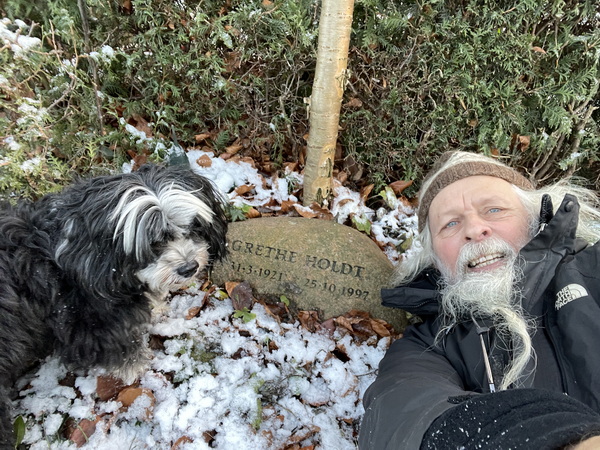
Selfie taken on a previous Christmas Eve at my
mother's grave
(to show my brothers that I hadn't completely forgotten her).
|
The explanation was simple: for 25 years, the cemetery had been sending
letters to my younger brother Steen asking him to extend the grave site. They
were never answered – because that was the period when he had run away to
Cameroon to become a gold dealer. The only consolation is that this spares me
further posthumous discussions with my mother when she was at her lowest ebb (more
on that from page 63 here).
I know that at a time when many people in Palestine and Ukraine are having
everything they hold dear torn down around their ears, many of you will probably
say that at the age of 78, I must learn to grow up and live with the new world
disorder.
But I have spent my entire working life looking back on the life that was. So
you will have to bear with me a little longer.
|

A reminder from the disorder of the outside world
|
A LITTLE ABOUT MY REAL "WORK"
Fortunately, my lectures
On
saying yes are still popular, but this year I also came up with a
brand new lecture – and it was actually little Elna who inspired it.
One day, we were talking to her mother, Lærke Rydal, who edits Louisiana's
catalogs. “What exhibition are you going to write about now?” I asked. She
mentioned that they were going to do an exhibition on the late artist Marisol
Escobar, but that it was difficult to find anyone who had known her personally.
“Well, I lived with her—as the only man in her life,” I said. And so it may
be that Lærke hired me to write the catalog text. Fortunately, it wasn't that
difficult, as I had already described
her in “Christmas in New York” in my book.
But it didn't stop there. I was also asked to give two lectures about her at
Louisiana – one has already taken place,
the
other can be seen on January 25.
Nevertheless, I realized that I actually knew surprisingly little about her.
Our relationship had been brief, and apart from a visit five years later, when I
gave her the book, we had not kept in touch. So I delved into old letters and
diaries to find out what had actually happened back then.
I didn't know her art. She was in love with my “fish eyes” and tried to keep
me isolated in her private home, where no one else came. That's why I never saw
her studio on Broadway—just a few blocks away—where she met with her business
associates and friends like Andy Warhol.
Since I described her quite negatively at the time, it was a huge experience,
50 years later, to stand in front of
her incredible
exhibition at Louisiana – not least her fish.
You ABSOLUTELY MUST SEE IT FOR YOURSELVES.
|
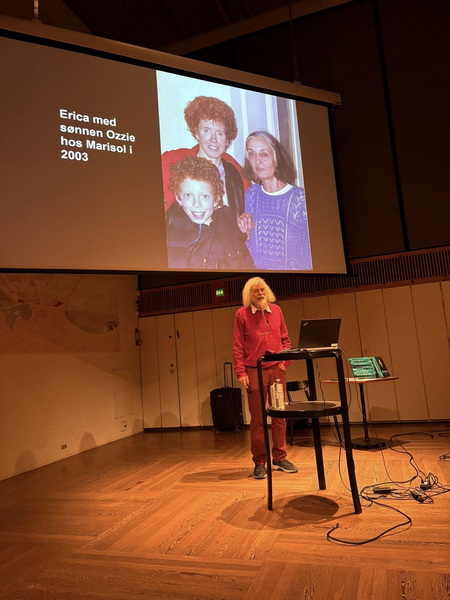
In “Christmas in New York” in my book, I mentioned how in 1973 I
fled from Marisol to the young woman Erica, who helped Marisol polish
her fish sculptures. We kept in touch, and the evening
before my lecture at Louisiana, 52 years later, I managed to get Erica
to send me this reunion photo with the now elderly Marisol.
|
MY NEW BOOK:
"The Ghetto in Our Hearts - American Images through 50 Years of Black and White History"
My new book was supposed to be published by Gutkind before Christmas, but the
year was plagued by misfortune, to say the least. Originally, it was to be laid
out in April by the talented graphic designer Carl Zakrisson in the same format
as
his beautiful Catholic Miracles – a kind of meeting
between a large art photobook and my little old political book
American Images.
|

On the right, Søren Møller and Carl Zakrison's “Catholic Miracles” with
the size
of the new book “The Ghetto in Our Hearts"
|
The problem quickly became apparent: I hadn't specified exactly which images
belonged to each entry. So Carl had to give up. My publisher, Søren Møller
Christensen, then passed the task on to a talented Russian friend, Viktoria. But
here too we encountered the same problem: it simply took me longer to explain
the layout than to do it myself, which I then did.
Meanwhile, Gutkind had run into such serious financial difficulties that
their Swedish owner Bonnier pressured the publishing house to abandon both their
children's books and expensive titles such as mine. Therefore, it will probably
be some time before you see what I consider to be my life's work: a personal
account of the history of black and white America over 50 years – written with a
view to publication in the many countries with large minorities where
American Pictures was never published.
MY EXHIBITIONS
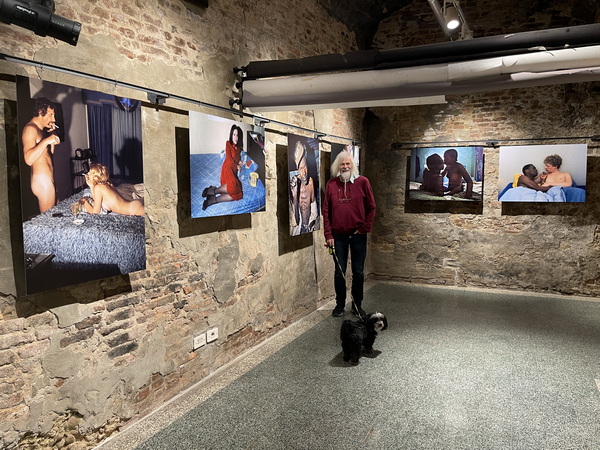
In connection with my exhibitions in Italy this year, I also ended up giving
a series of lectures on my photographs. The large exhibition I had in the
castle town of Cortona a couple of years ago had moved on to another
beautiful old castle town on the border between Umbria and Tuscany. This was
thanks to my Danish friend Anemarie Ræbild, whose house we usually stay in in
Panicale. At a party at her house, I met the curator Margherita Belaief, who
also wanted to host the exhibition there – with lectures.
As something new, I used AI-translated subtitles on PowerPoint
so that locals could follow along when I spoke English. But since there is
a large Danish colony just outside
the city, I ended up giving a lecture entirely in Danish.
At the opening in the spring, a couple of gallery owners from another castle
town, the old papal town of Città della Pieve, were so enthusiastic about the
lecture that they also wanted to host the exhibition there at the end of the
year. So when I was due to travel all the way to Italy with Interrail again in
December – for the third time this year – I decided to break up the long train
journey with lectures along the way.
First, I was invited to a
large Waldorf school in Berlin. When my
old travel companion in the US, Christina Voigt, heard about it, she
also wanted the lecture for her University of Europe, where she teaches film.
And sure enough, a large
photography school in Florence also wanted it the day before the opening
at Photografia Citta
della Pieve.
|

My audience is gathering at the “University of Europe.”

Christina Voigt begins with a teasing
series of photos of me from our trip to
the US in 2007 – but I got my own back with my photos.
However, I didn't forget to thank her for getting me
an exhibition at Louisiana
and the lifetime artist grant, which would not have happened
without the setup she helped me
create for my huge exhibition at
Øksnehallen in 2007.

The students attending my lecture at Berlin's Waldorf School
|
The result was four lectures four days in a row – sometimes with up to 1,250 km
between them – each day lasting 2–3 hours for enthusiastic photography
enthusiasts, followed by wonderful dinners. At the Waldorf School, they had
gathered several hundred students who – unbeknownst to me – were only in the 7th
and 8th grades. In the end, several of them broke down in tears over the violent
stories behind the images.
All in all, it went so well that I have decided to become an Interrail
lecturer in the future – rather than just being bored as a tourist on Interrail
:-)
Here I am giving a different kind of lecture about my photos:
Photographer
Jacob Holdt: A message of love
But I also just discovered that someone has posted my entire lecture in New
York in 2009 on Vimeo:
https://vimeo.com/4679447
OUR HOLIDAYS
Only of interest to people looking for inspiration for a different kind of
vacation!
Spring - Our
9th Interrail trip - to Panicale in Italy
We left a little late because I suddenly had to undergo hernia surgery. I
took it very seriously and even skipped dinner with my friends in the Adventure
Club. Our former ambassador to the Arab countries,
Muslim Ole Wøhlers,
asked me with concern why.
“I can't – I'm having a BIG, BIG operation tomorrow.”
He immediately pulled his pants halfway down and said:
“What kind of wimp are you? I've had hernia surgery three times – here, here,
and finally up here.”
Yes, yes. In the Adventure Club, you ALWAYS meet someone tougher than
yourself who has been through more than you have. But in this male-dominated
environment, have you also experienced the care I received the next morning?
Surrounded by women – five nurses and two doctors – one of whom said:
“Jacob, now I'm going to put you to sleep. And you can rest assured, even
though your book kept me awake during my youth.”
This adventurer became even more anxious when I woke up and was told that I
couldn't travel for two months because of my insurance. So what do you do when
you have to open an important exhibition in Panicale? You take responsibility,
sacrifice yourself for the art ... and run away.
See how the rest of the
9th Interrail trip went here.
Autumn - Our
10th Interrail trip - to Greece, Italy, and France
where I celebrated my...
10-year anniversary
of my last flight!
...that is, since 2015, when I was persuaded to fly to the US to make the
film Jacob
Holdt – An American Love Story.
I do not need to remind you of the alternatives.
Actually, in the diary under the pictures, you can see how easy it is –
completely climate neutral, as there are plenty of seats available on the hourly
trains :-) – to take the train all the way to Greece.
Travelogues are
boring, so only read this part if you are considering an Interrail trip yourself!!!
In short: Buy Interrail when they have their 25% discount offer, so each day of
travel only costs around DKK 330. On the first day, take the train to Rosenheim,
where the B&B hotel costs around DKK 500 and is located right next to the
station (we think Munich's hotels are too expensive, unless you want to enjoy
this beautiful city on your way home, for example). The next day, take the train
all the way down to Bari in southern Italy and hop on the ferry to Patras (part
of the Interrail pass and also climate neutral, as it is a truck ferry that
sails anyway). And the next morning, you wake up in the beautiful Peloponnese.
Here, however, we rented a car to reach the remote ancient monuments, then took
the train to Athens and sailed on to the island of Syros, where we just wanted
to relax. I ran with Tajo on the beaches in the morning, and we enjoyed the slow
pace of life. A few days in the slightly worn but still wonderful Athens
followed – until the weather intervened.
A violent hurricane made the journey unsafe. We considered Bulgaria, but dared
to take the ferry back to Italy anyway. It was a dramatic voyage with hours
without the possibility of docking and a lot of seasickness. We didn't want to
stay in stormy Bari, so with Interrail you just change direction as the wind
blows and head for the sun – four hours north to Rimini.
From there, we went on to Cannes, where we hadn't been since the 1981 Film
Festival, when American Pictures participated—and we were kicked out of
the festival hotel because we were the only ones with two one-year-old children.
This time it was quieter, and Tajo and I loved our morning runs on the
Croisette.
We were supposed to continue on to Paris to meet Marie Tetzlaff, but stayed a
few days in Cannes, where the hotels were three times cheaper. So when we were
to meet my
25-year resident in New York, Christina Sun, in Paris, we took an
Airbnb apartment (which we otherwise avoid so as not to ruin the cities for
those who live there). When Christina had to play in Normandy, I continued on to
Mannheim, where Christian Lund had invited me to a
fantastic concert with
Turkey's great musician, Zülfü Livaneli. Thanks to their friendship, we
sat in the front row in front of 1,000 enthusiastic German-Turks – a great
experience in an otherwise somewhat boring city, whose cheap hotels we normally
stop over in on Interrail from the south.
Our 11th Interrail trip – to Berlin, Florence, and Città della Pieve
...you've already heard about this during the lecture
|
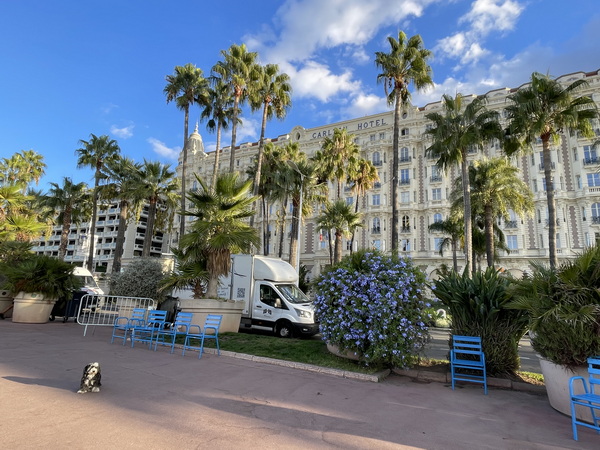
Tajo during our morning run on the Croisette opposite the Carlton Hotel
from which we were thrown out in 1981 during the Cannes Film Festival.
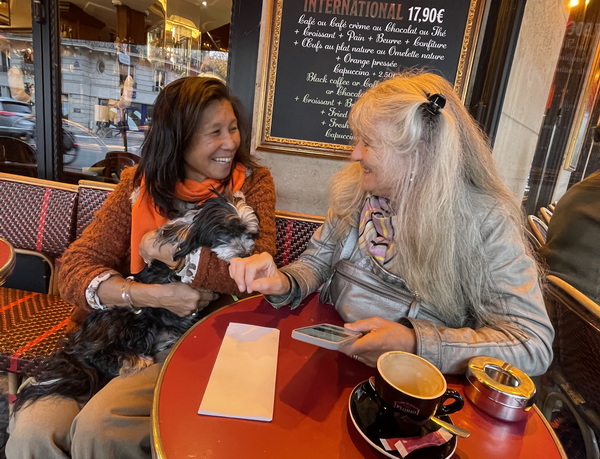
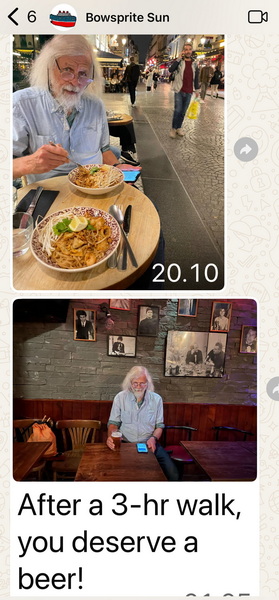
Breakfast in Paris with Christina Sun when she arrived from New York.
When Vibeke was about to return home, it was difficult
to find peace and quiet for the lively Christina, just like during the
25 years I lived with her in New York. Since she loves to draw ships,
her Facebook and Instagram name is
Bowsprite Sun.

To the Livanella concert with Christian Lund
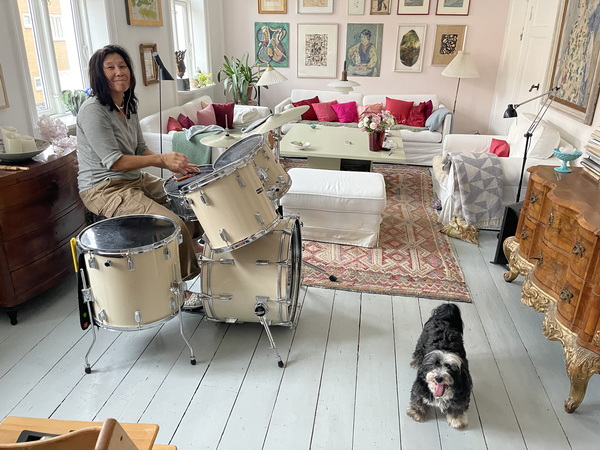
A month later Christina stopped playing in Normandy and moved in
with us in Denmark where she continued playing in our living room.
Luckily for Tajo that he is turning deaf.
|
MY WORK AT UBUNTUHUSET
The Ubuntu House's “100% for the Children”
Here, Camilla Legendre and Charlotte Lea Jensen continue their work with
100% for the Children for Africa's vulnerable
and marginalized children.
The Ubuntu House's “Bridge Builders”
In August, we celebrated the Bridge Builders' sixth birthday with a
sing-along with Bertel Haarder.
Hear him sing and talk here. When he heard that Ubuntuhuset's former
patron had been Nelson Mandela's daughter, Zindzi, he immediately began talking
about his own encounters with Mandela. Unfortunately, Özlem Cekic was unable to
attend that day, as her sister was seriously ill in hospital.
|
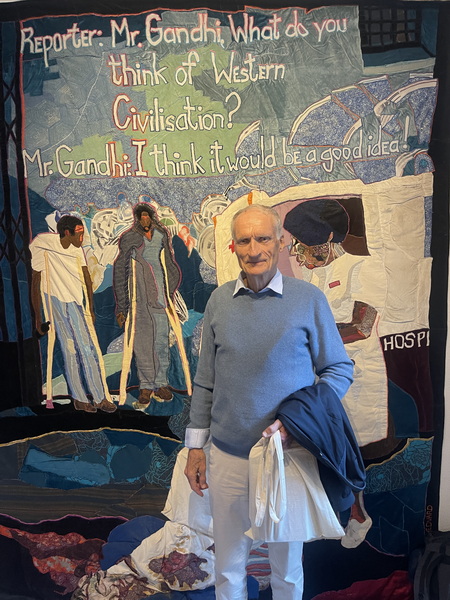
Bertel Haarder (popular
minister of government for many years)
– who, if anyone, is fighting for
Western civilization

Bertel Haarder sings and tells stories at Ubuntuhuset
|
Later that year, I myself received the
Bridgebuilders' “Bent
Melchior Prize” at the Avenue Theater. It was a great honor—and a
powerful experience—where I mentioned many friends in my speech, each of whom
has been important to my work with dialogue, especially when it came to
something as extreme as meetings with the Ku Klux Klan.
You really should read the speech
in English here:
www.american-pictures.com/dansk/artikler/Tale-til-Melchiorprisen-US.htm
I was particularly moved by the speech given by last year's award winner,
Sarah Smed (in Danish):
www.american-pictures.com/dansk/omtale/2025-11-09_sarah.smed.htm
|
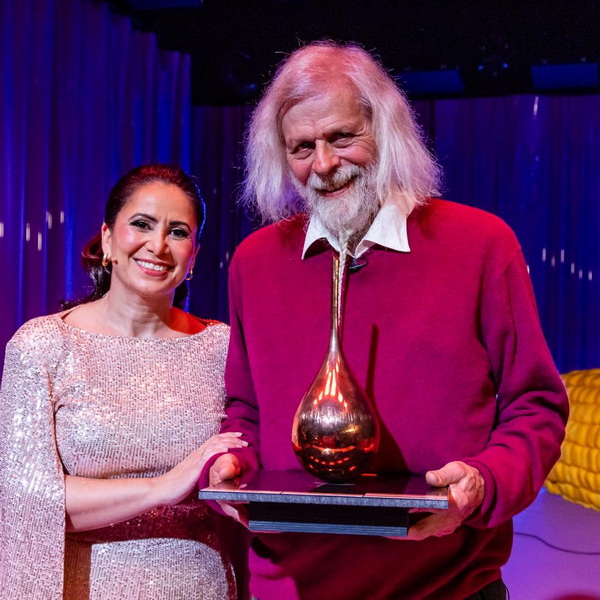
Özlem presents me with the beautiful “Drop” by Jens Galschiøtt
— a lovely gesture, considering that I am her daily “janitor” at the
Ubuntu house.
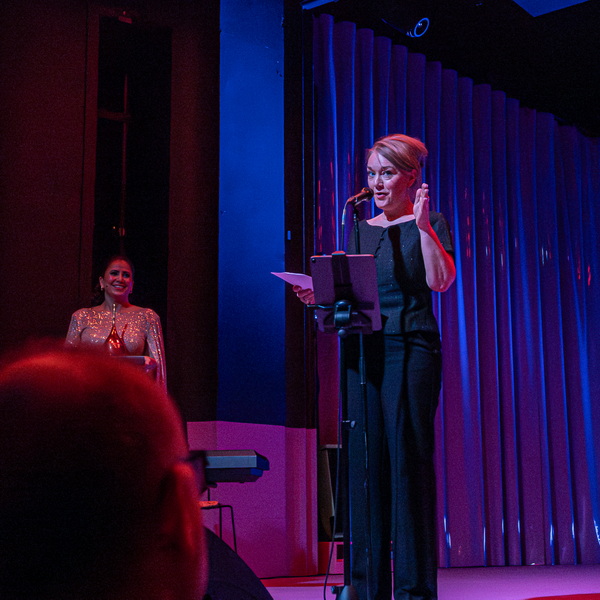
Sarah Smed during her beautiful speech, where everyone sat in suspense
wondering who would receive this year's award.
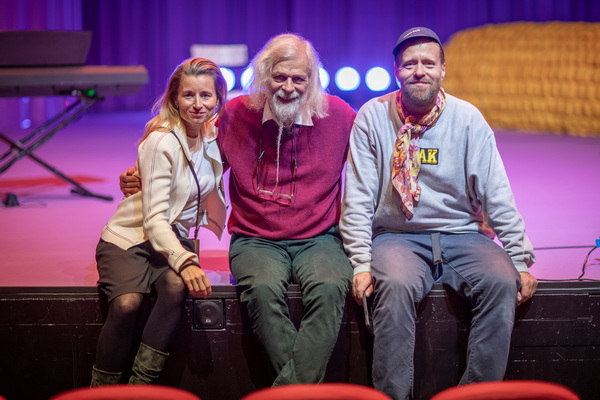
With Charlotte Borg and Theis Mortensen, the two who, as very
young students
at DK4 at the time, had the crazy idea of pairing me up with the United
States' largest clan leader—which led to my many years of “membership”
in the KKK.
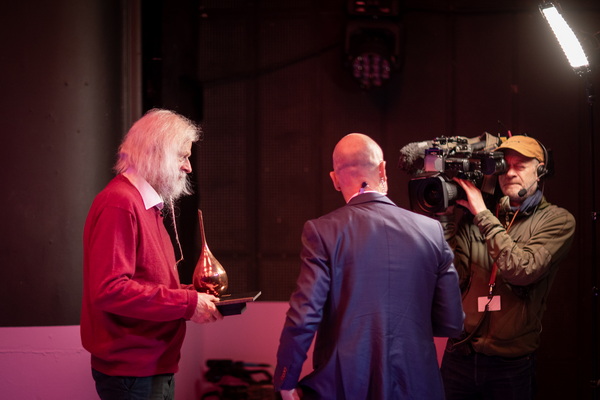
As usual, I was interviewed by TV2, which ran it on a loop. I had no
idea how many people would see it until the next morning at 7 a.m., when
I was stopped by a lady at the National Bank at the end of Langlinje
with, “Congratulations on the award,” and then by many others before I
got home at 8:30 a.m.
|
The only thing that annoys me a little is that the few awards I have received
are often only on loan for a year—in this case, a beautiful sculpture by Jens
Galschiøt—after which they must be passed on to the next recipient. A year even
to Prince Joachim, as if he needs more feathers in his cap. Unlike athletes, I
only have the Björn Afzelius award of Sisyphus with the boulder standing... and
even that has been hidden away by Vibeke so that I don't get delusions of
grandeur. So the Sisyphean task continues uphill.
|
My Sisyphus rolling stones... when I find it |
New Outlook, The Ubuntu House's Jewish peace group
Once again this year, we have had good dialogues, including
this one between Israeli-born Tali Padan and Lebanese-born Billy
– and
this Passover dinner with New Outlook's new partner, the Muslim Hizmet
group, where we take turns meeting at our place and theirs in Hvidovre.
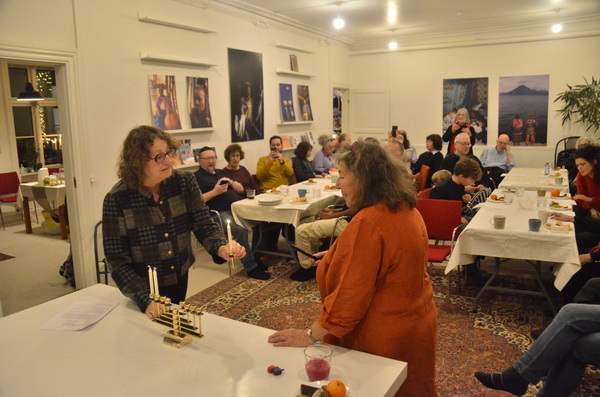
This year's Chanukah light festival was nearly canceled after the terrorist
attack in Sydney the day before. Fearing copycat attacks, I did not dare to
announce the event publicly on Facebook and spent half a day organizing PET
protection outside. Fortunately, we have only needed this before when opening
the women's mosque in the same premises. By sending out private invitations and
encouraging people to come and provide protection for the vulnerable Jews, we
still managed to fill the room.
But check out all our other events and the background story here:
www.american-pictures.com/ubuntu/
THE DEAD OF THE YEAR
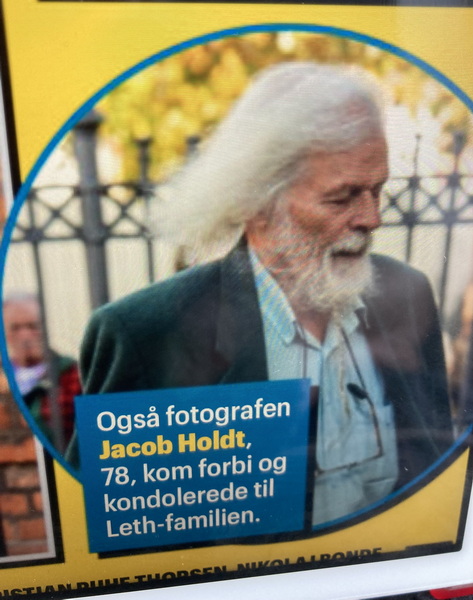
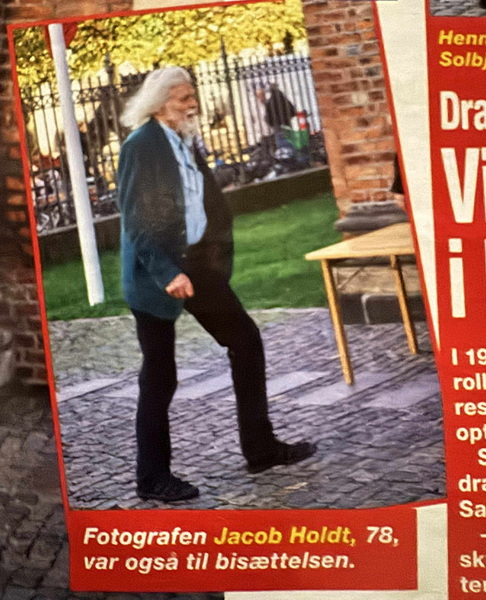
Jørgen Leth
became a good friend when he helped me enormously during Clinton's invasion
of Haiti in 1994, which I also found liberating at the time. As the only white
person, I jumped on a plane to see “how our boys were doing.”
It was
the first time since the Vietnam War that I felt proud to be embedded with the
US Army.
But since I always move in with the poorest people in new countries, Jørgen
Leth warned me not to move into the violent slum area of Cité Soleil. Which, of
course, made me do just that – something I have since teased him about in my
lectures, which only those familiar with Leth can understand.
“Well, I had the women of Cité Soleil all to myself!” Yes, it's a long story,
which you'll have to hear in my lecture Om at sige ja (On Saying Yes).
Since then, we have met often – including at our mutual friend Bente
Klarlund's house – and even traveled together to Crete. It was there that Søren
Ulrik Thomsen said:
“Now I realize the difference between you and Jørgen. He is the ultimate
aesthete – and you are the ultimate ethicist.”
It was this difference, among other things, that sustained our long-standing,
loving, and teasing friendship.
|
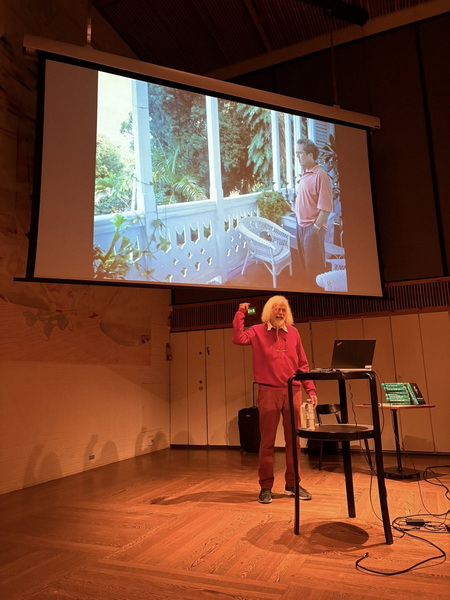
My visit to Jørgen Leth in Haiti, which I incorporated into my
Marisol lecture at Louisiana, influenced by his death.
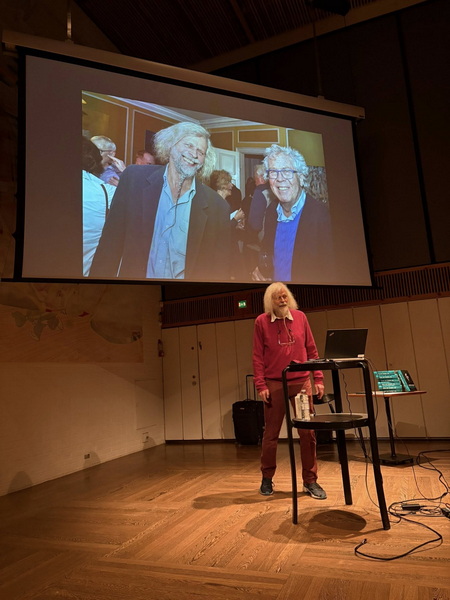
Here's one reason why I don't usually go to celebrity funerals, but
Christian Lund had prepared a memorial service for Leth with writers and
asked
me to record the speeches for the funeral, where I also knew the
relatives, such as Christian and Asger Leth.
|
Ebbe Preisler
Ebbe and I got off to a rocky start after he started our joint Holdt–Preisler
Film Company in 1976 with the idea of adapting Amerikanske Billeder
(American Pictures) for film. When I later met a young high school student in
Hjørring who was much better at photographing my slides, we ended up pushing
Ebbe out and got DR to co-finance the film (which, at 8 km long, was a failure
except in Cannes and various festivals).
Nevertheless, we maintained a good relationship through mutual friends, where
I closely followed his wife's worsening Parkinson's disease – and the shared
pain that led to their now well-known joint death.
(For foreigners: they committed suicide toghether, he woke up and put in prison
for murder, after which he killed himself a second time, this time succesfully).
Hans Jørgen Bonnichsen
Although PET (Danish FBI) pursued me for several years, it was not during his
tenure as director—otherwise, we would likely have quickly engaged in dialogue.
We shared the belief that one can ALWAYS triumph over the forces of
darkness and evil, and we often met when we were both interviewed in the media.
As he recently stated in Kristeligt Dagblad:
“You have to be grateful for being able to control your inner evil. Because
if you can do that, you also have the opportunity to exercise the love and care
that is necessary when meeting those who cannot.”
That is basically what I try to say in my lectures.
In recent years, we often fell into conversation when I met him on runs with
Tajo in Russia—that is, not at our common enemy's, but in our common breathing
space around Tegners Museum, where he also had a summer house.
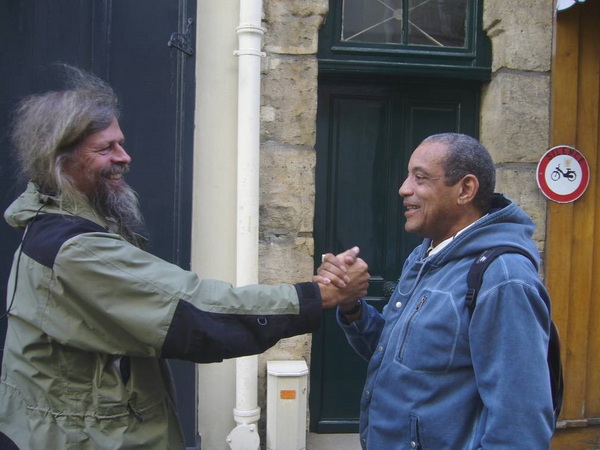
Harp Lelshap
See my reaction on Facebook when Harp burned down in Paris in May.
Lifetime prisoner Harb Lelshab was incarcerated for murder.
The prison first allowed me to invite him as a guest speaker for the release
of American Images in 1977. Later, I hired him to show the show at the Ubuntu
House every evening as part of his rehabilitation—which is why it started at 6
p.m. in those years, so he could get back to Herstedvester before midnight.
In our work collective, he met the French pianist Patricia Octavia, and when
he was released after eight years for good behavior, they moved to his hometown
of Washington, D.C., in 1986 and started a family. He has never been to prison
since.
They later moved to France, where he attended my lectures several times, as
he did here in 2007. But by the time of my last lecture in 2018, he had become
too ill and disabled to attend. And it was probably because of his disability
that he was unable to escape the fire.
Thank you for your contribution to American Images and our lives, Harb.
Karen Sjørup - my secret high school love
Many of us at Esbjerg State School were courting her. Back then, it was still
acceptable to comment on women's appearance, so when I heard she was going on a
school trip to Copenhagen in her second year, I immediately signed up.
I actually managed to share a room with her and some of her friends at a
mission hotel in Istedgade during one of the drinking binges. None of us can
remember anything else. I have described the trip
here on page 4 in “Om at sige ja til prostituerede” (Saying Yes to
Prostitutes) – perhaps not the most flattering place, but she herself
has approved the mention.
She later became a well-known feminist and gender researcher, and when we met
at conferences on minorities, it was natural to get her critical view of my
texts on women. During her long illness, she often came for coffee at my summer
house.
That's why her friend, our neighbor Lisbeth Rudbeck, didn't understand why I
didn't go with her to the funeral in Frederiksberg.
“I've lost too many old friends lately,” I said, “and now I only go to
funerals where I know the relatives and can support them in their grief.”
You become hardened with age.
|
Pictures of Karen Sjørup later |
And that also applies to ...
Ole Andersen – Krogerup folk high school drinking
buddy...
whose wife's funeral I attended to support Ole, but not his own six months
later after his long battle with dementia.
He is already described in detail in
the book Om at sige ja (About Saying Yes) and in my YouTube speech
here for the
publication of the book.
None of our teachers at Krogerup would have imagined that we would both end
up as authors after all the drinking parties we had back then – in which I
portrayed us here
on home movie film as young people together with Ole Wivel's drunken kitten.
The sad thing about sending out Christmas letters is that every year I discover
more old friends who have passed away. By sending out the American ones this
year, I discovered the deaths of two Jewish enthusiasts—friends who meant a
great deal to me.
They will be mentioned in next
year's Christmas letter.
Elias
Baumgarten
popular
professor who organized my show at the University of Michigan every year.
Janet Crayne
old girlfriend who received an honorary award at the White House and helped
edit my new book.
Reunion with me?
Well, how long can we continue when we reach my age?
Perhaps I will simply be remembered by some as a puzzle they could never figure
out how to put together:
|
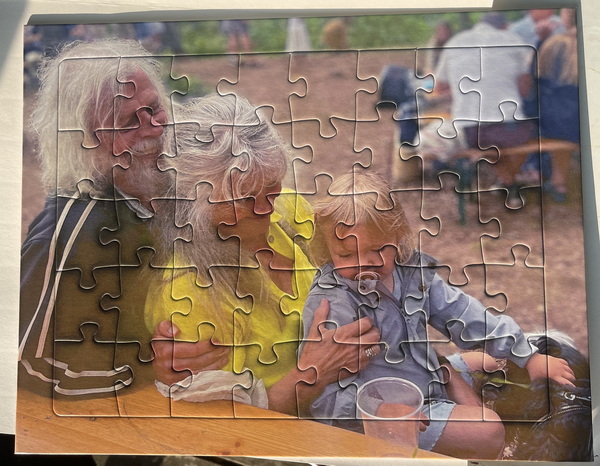
On an outing with Elna
|
Or some will remember my original photos—proof that my photos are not
made with AI—which, after six moves from safe deposit box to safe deposit box, I
am now considering donating to a larger museum.
I've always wanted to give the best of my art pictures, which V1 Gallery is selling here for 5,000
dollars each, to my old friends as a memory of our friendship. Many have
allready received them for birthdays and the like.
So this will be your possible Christmas gift this year -
to get one of these - my most popular,
least sad pictures
- or
another
exhibition photo of your choice - at specified print prices.
Let me know if you are interested.
Merry Christmas and a
Happy New Year
with loving thoughts for all
Remember that the love we give out ....
...... will come back many times over!!!
Trump: "Jacob, I never stopped loving you"
|