|


Just
as the show must never become a show in itself, oppression should not
be left untreated. Since enormous emotions are created in the audience
a discharge or healing process is important afterwards. In the racism
workshop next day on campus an explosive dialogue usually erupts in which
the participants openly express their own racism or - often for the first
time - begin to understand it and its early roots in childhood.
Jacob Holdt is drawing
on his experiences from other segregated or ex-slave societies to help
students see their situation in a larger context. For schools that can
afford it it is also recommended within a week to follow up with American
experts in the field such as Tony Harris.
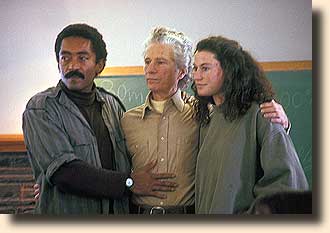
"After six and
a half hours I did not want for this enlightment to end. The only painful
feeling I had was that of hunger. I learned something more valuable on
that day than I could have learned in four years of college courses. In
essence, I learned how to be human."
From a student's detailed description of Tony Harris'
workshop
More
photos from the work of Tony Harris
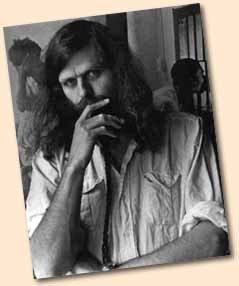
"The workshop
you held today affected me in so many ways I don't know where or how to
begin. It's not a question of how much or how little, or if you can exempt
yourself from some of the guilt by comparing yourself to a "true
bigot".
Your workshop deepened my understanding of this and impressed upon me
how important it is to continually confront ourselves with our racism
without fear of admitting to it or of actively changing our views."
See also
A
student's reaction to Jacob Holdt's workshop
The
workshop of Tony Harris
The
basic ideas on oppression used in the workshop

| 













